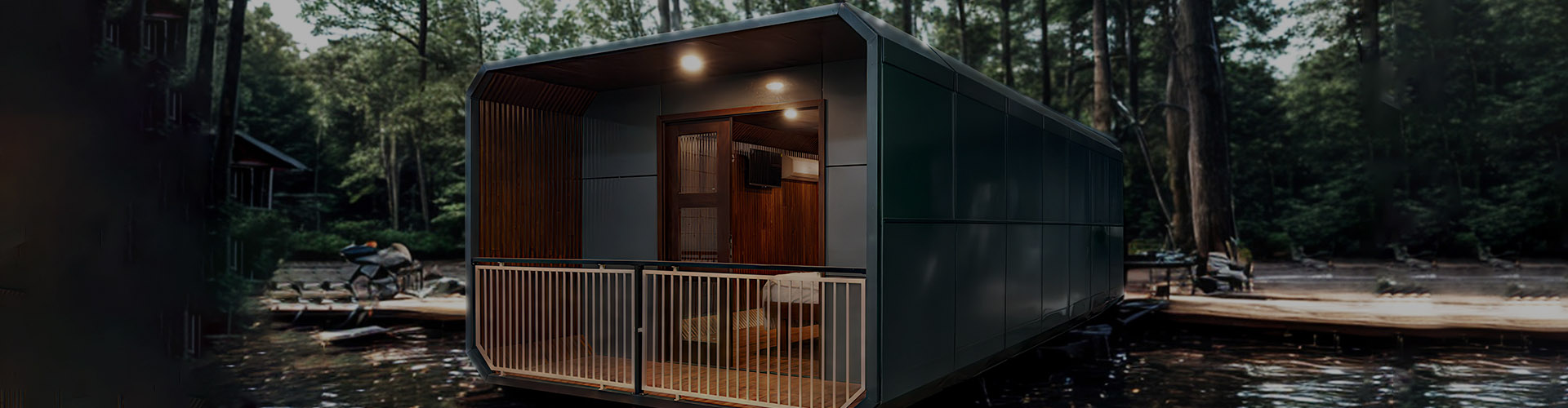
Why Wooden Cottages Are Becoming Popular for Resorts and Farmhouses in India
Home/ Why Wooden Cottages Are Becoming Popular for Resorts and Farmhouses in India
Home/ Why Wooden Cottages Are Becoming Popular for Resorts and Farmhouses in India
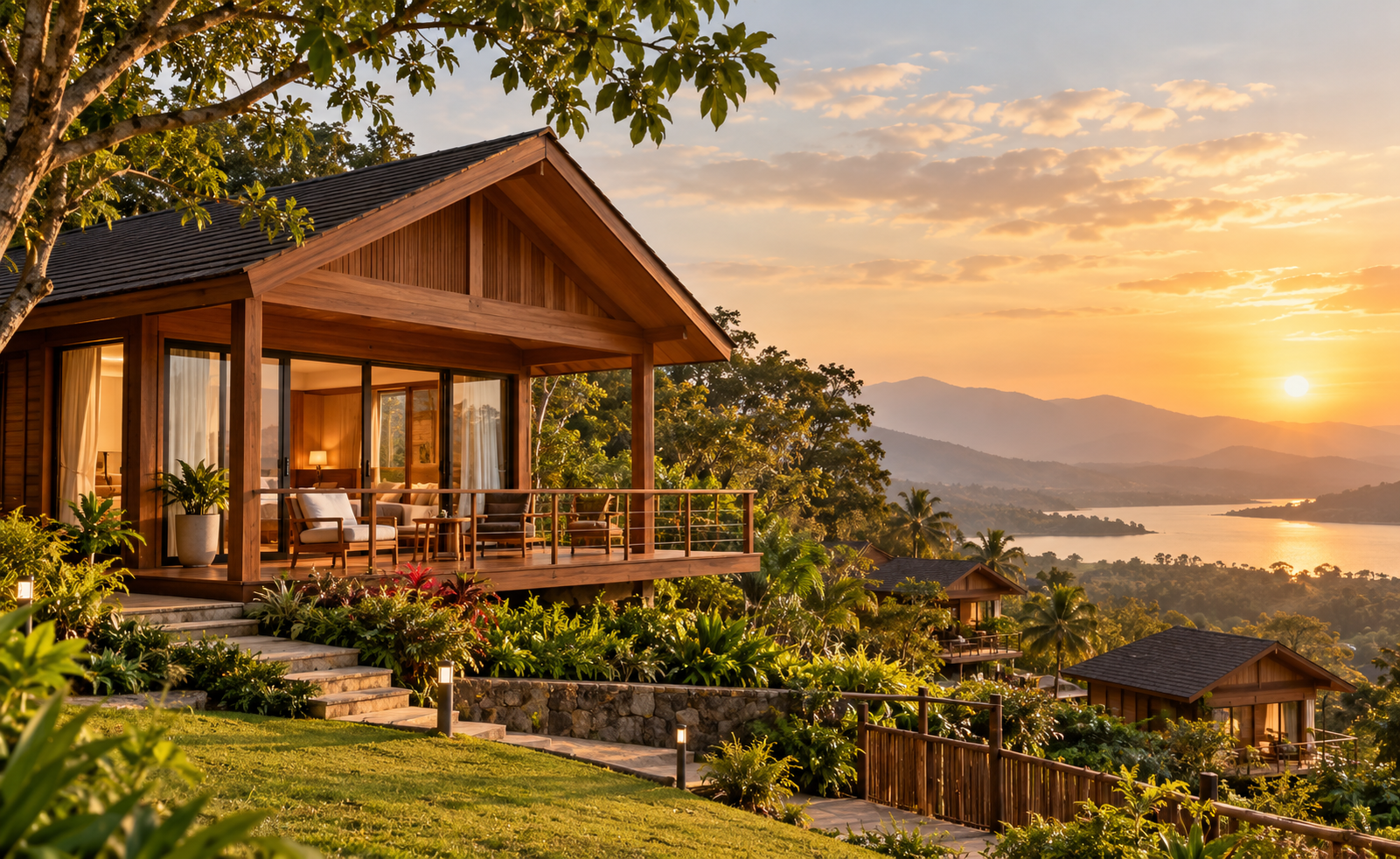
A perfect holiday often consists of simple moments in a peaceful, comfortable environment. Surrounded by nature, fresh air, and scenic views, travellers increasingly prefer stays that provide relaxation and a break from their daily routines. This rising popularity for nature-inspired experiences is one reason why wooden cottages are becoming a preferred option for resorts, farmhouses, and vacation getaways.
Across India's leisure destinations, wooden cottages are becoming an appealing accommodation option for resorts, farmhouses, and nature retreats. Their warm interiors, distinctive architecture, and ability to blend into natural surroundings make them particularly attractive for hospitality properties built around experiences rather than conventional hotel stays.
The broader tourism market provides an encouraging backdrop. According to India's Ministry of Tourism, the country recorded approximately 2.95 billion domestic tourist visits in 2024, a 17.5% increase over 2023.
While the report does not specifically measure demand for wooden cottages, it highlights the scale of India's domestic travel market.
For developers exploring a wooden cottage in India, the appeal goes beyond appearance. Prefabricated construction methods, flexible layouts, and opportunities to create distinctive guest experiences are making timber-based accommodation worth considering.
But what makes wooden cottages suitable for hospitality projects, and what should investors know before choosing them?
A comfortable bed and a clean room are basic expectations. What makes a holiday memorable is often the experience surrounding it. A cottage overlooking a coffee plantation, a private retreat beside a lake, or a wooden cabin nestled in the hills offers something different from a standard hotel room.
Wooden cottages can help create that distinction.
Their natural textures, warm finishes, and connection to outdoor spaces contribute to a relaxed atmosphere. Large windows, private verandas, and thoughtfully designed interiors can make even a compact cottage feel inviting.
For resort owners, such an environment creates opportunities to develop properties with a stronger identity.
Consider two accommodation options in a hill station. One offers conventional rooms in a multi-storey building. The other features individual wooden cottages with private decks, landscaped pathways, and mountain views.
Both can provide excellent hospitality. However, the second offers a different kind of experience: greater separation between rooms, direct access to outdoor spaces, and a closer connection to the landscape.
These qualities can appeal to couples, families, and travellers seeking privacy.
The cottage itself becomes part of what guests remember, photograph, and share. Of course, architecture alone does not guarantee bookings. Service quality, accessibility, amenities, pricing, and the surrounding destination remain equally important.
One of the reasons why developers prefer prefab wooden cottages is their convenience and speed. In conventional construction, much of the work happens directly at the project site. Materials arrive in stages, and activities such as masonry, plastering, curing, and finishing follow a sequence.
Prefabrication takes a different approach. Building components are manufactured or prepared in advance and then transported to the site for assembly.
For hospitality projects, construction time can directly influence business planning. A resort that opens before the peak tourist season may have more opportunities to generate revenue than one that misses its planned launch.
Prefabricated wooden cottages offer many advantages, such as:
Reduced dependence on certain types of on-site construction work.
More controlled manufacturing conditions.
Potentially shorter installation periods.
Less disruption to surrounding areas when properly planned.
However, prefabrication does not eliminate the need for foundations, utility connections, permissions, transportation, or site preparation. The overall project timeline depends on all these activities, not simply the time required to assemble the cottage.
A resort surrounded by forests, plantations, or hills needs architecture that complements its setting. Large concrete structures can be visually dominant, especially on smaller properties.
Wooden cottages offer another design approach. Their natural colours and textures work particularly well with landscaped gardens, stone pathways, outdoor decks, and vegetation.
This versatility makes them suitable for several hospitality concepts, such as:
Wooden cottages can create a warm, secluded atmosphere within carefully planned forest-edge properties. Large windows, shaded decks, and natural finishes help guests enjoy the surrounding landscape without compromising indoor comfort. Construction must still respect applicable forest, environmental, and land-use regulations.
In mountain destinations, individual cottages can be arranged to take advantage of views and terrain. However, sloping sites require proper geotechnical assessment, foundation design, drainage, and safe access. A prefabricated system may simplify certain construction activities, but it cannot replace these essential engineering requirements.
Wooden cottages also work well for private farmhouses, coffee estates, and countryside retreats. A compact cottage can serve as a weekend home, guest accommodation, or part of a larger farm-stay development. With thoughtful landscaping and outdoor seating, the property can offer a comfortable living experience without relying on an oversized building.
Sustainability is increasingly relevant to how developers plan, build, and operate tourism properties.
India's Ministry of Tourism has introduced a National Strategy for Sustainable Tourism, focusing on environmental protection, biodiversity, economic sustainability, and benefits for local communities.
For developers interested in eco-friendly resorts, wooden cottages can form part of a more responsible construction approach.
Wood is a renewable material when sourced from responsibly managed forests. It also stores carbon absorbed during tree growth. However, not every wooden cottage is inherently durable or sustainable; its longevity and environmental impact largely depend on the materials used and the manufacturing process.
The environmental impact depends on timber sourcing, manufacturing processes, transportation distances, protective treatments, building lifespan, and eventual disposal or reuse. Prefabrication can also support efficient material usage by allowing components to be cut and prepared in controlled environments.
For sustainable resorts, the most effective approach combines responsible material selection with energy-efficient design, water conservation, waste management, and minimal disturbance to the surrounding landscape. A wooden cottage may contribute to these goals, but the complete property determines its environmental performance.
Not every hospitality project needs large villas or conventional hotel rooms. Some developers want compact accommodation for couples. Others need family cottages, premium suites, or standalone units with private outdoor spaces.
Wooden cottages can accommodate these different requirements. A resort might combine smaller cottages with larger family units while maintaining a consistent architectural identity.
Consider a developer who owns a suitable plot near a popular weekend destination but wants to test demand before making a substantial investment. Instead of developing the entire property immediately, the owner could plan the infrastructure for a larger resort and begin with a limited number of cottages.
If the business performs well, additional units could be introduced in later phases, subject to approvals and site capacity.
This approach can help developers manage investment exposure. However, phased construction should be considered during the initial master planning. Drainage, electrical capacity, sewage treatment, water supply, internal roads, and fire access must accommodate the intended development.
Adding cottages later is not necessarily simple if the original infrastructure was designed only for the first phase.
One of the most common concerns about wooden construction is durability. Can wooden cottages withstand heavy rainfall, humidity, summer heat, and changing temperatures?
The answer depends on the building's design, materials, and maintenance.
India has diverse climatic conditions. A cottage built in coastal Karnataka faces different environmental challenges from one located in Rajasthan or Himachal Pradesh. A construction system suitable for one location may require modifications for another.
Rainwater management is particularly important for wooden cottages. Proper roof overhangs, drainage, waterproofing details, ventilated assemblies, and protection from ground moisture help reduce the risk of deterioration. Timber components should be selected and treated according to their exposure conditions.
Wooden cottages require appropriate termite management, especially in regions where termite activity is common. Depending on the construction system, protection may involve treated timber, physical barriers, soil treatment, regular inspections, and moisture control.
Exterior finishes may also require periodic maintenance. For resort operators, these activities should be included in the annual maintenance budget rather than treated as unexpected expenses.
Fire safety must be addressed through appropriate structural design, material specifications, compartmentation where required, electrical safety measures, fire detection systems and safe evacuation arrangements.
Engineered timber products and conventional timber assemblies have different performance characteristics. A qualified structural engineer and fire safety professional should assess the proposed construction system to ensure compliance with applicable regulations and standards.
The important question is not simply whether a wooden cottage can withstand India's climatic conditions, but whether it has been designed and maintained to suit the specific environmental conditions of its location.
For resort developers, aesthetics and construction efficiency matter, but financial performance ultimately determines whether a project is viable.
A wooden cottage resort should be evaluated like any other hospitality investment. Land cost, construction expenses, infrastructure, financing, staffing, maintenance, marketing, and expected occupancy all influence profitability.
Suppose a small resort plans to operate six wooden cottages.
Each cottage has an illustrative average room rate of Rs. 6,000 per night, with an expected annual occupancy of 50%.
The estimated annual room revenue would be:
| Illustrative Resort Revenue | Value |
| Cottages | 6 |
| Room rate (per night) | Rs. 6,000 |
| Occupancy | 50% |
| Estimated annual room revenue | Rs. 65.7 lakh |
Calculation: 6 cottages × Rs. 6,000 × 365 days × 50% occupancy. Hypothetical figures, not a market forecast.
This figure is gross room revenue, not profit. It excludes operating expenses, taxes, booking commissions, financing costs, and other deductions.
The example illustrates why developers should examine revenue potential alongside construction costs. A cottage that costs less to build does not automatically produce a better return. Similarly, a premium-looking property will not necessarily achieve higher occupancy.
Location, guest experience, operating efficiency, and pricing strategy remain critical.
Before investing in a wooden cottage India project, developers should evaluate the property as a complete hospitality operation rather than focusing only on the accommodation units.
A scenic location is valuable, but guests must be able to reach it safely. Road access, parking, emergency vehicle access, and proximity to tourist attractions influence the overall experience.
For prefabricated cottages, the delivery route must also be assessed. Panel dimensions, vehicle access, unloading space, and installation requirements can affect project feasibility.
A resort requires more than attractive accommodation. Reliable electricity, water supply, wastewater treatment, internet connectivity, fire safety, and stormwater drainage are essential.
Developers should also verify land-use permissions, local building approvals, tourism-related registrations, and any applicable environmental restrictions.
Ask potential suppliers about timber species, moisture content, treatment methods, structural design, insulation, waterproofing, installation procedures, and warranty conditions.
Request clear technical specifications rather than relying entirely on photographs or marketing claims. A well-designed wooden cottage should balance visual appeal with practical performance.
Maintenance requirements deserve particular attention in hospitality properties because accommodation units experience frequent use.
Furniture, flooring, exterior finishes, bathrooms, and building services all need regular upkeep. Selecting durable materials and planning accessible maintenance details can help operators manage costs over the building's service life.
The opportunity for wooden cottages extends beyond traditional hill station resorts. They can be considered for wellness retreats, plantation stays, countryside developments, boutique hospitality projects, and private holiday homes.
As developers explore sustainable hospitality and distinctive accommodation experiences, timber-based construction offers another option worth evaluating. The growing importance of sustainable tourism also encourages developers to think more carefully about how properties interact with their surroundings.
However, the long-term success of wooden cottages will depend on more than architectural appeal. Reliable construction quality, climate-appropriate design, responsible sourcing, and professional property management will determine whether these developments deliver lasting value.
For architects and investors, the objective should not be to replace conventional construction in every situation. It should be to select the building system that best suits the land, budget, intended use, and guest expectations.
Wooden cottages bring together several qualities that hospitality developers increasingly value: distinctive architecture, flexible layouts, a connection to nature, and opportunities for efficient prefabricated construction.
For resorts and farmhouses in India, they can offer an alternative to conventional accommodation while helping create spaces that feel personal and welcoming. But choosing a wooden cottage should involve more than selecting an attractive design. Site conditions, construction quality, climate suitability, maintenance, and financial planning all deserve careful consideration.
At Techle Indo Innovation, we believe better construction begins with understanding how a space will be used, where it will be built, and what it needs to deliver over time. Our prefabricated wooden cottage solutions are designed to support different residential and hospitality applications, with an emphasis on practical construction methods and thoughtful design.
Planning a resort, farmhouse, or nature retreat? Explore Techle Indo Innovation to learn more about prefab wooden cottage solutions and discuss the requirements of your upcoming project.