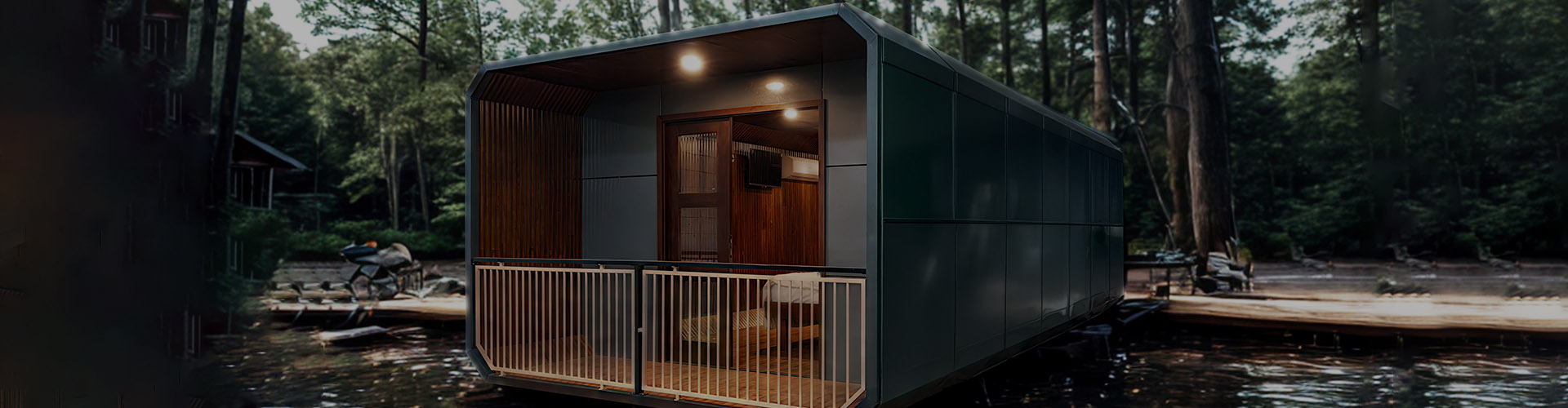
Techle vs. Woodle: The Science of Hybrid Strength
Home/ Techle vs. Woodle: The Science of Hybrid Strength
Home/ Techle vs. Woodle: The Science of Hybrid Strength
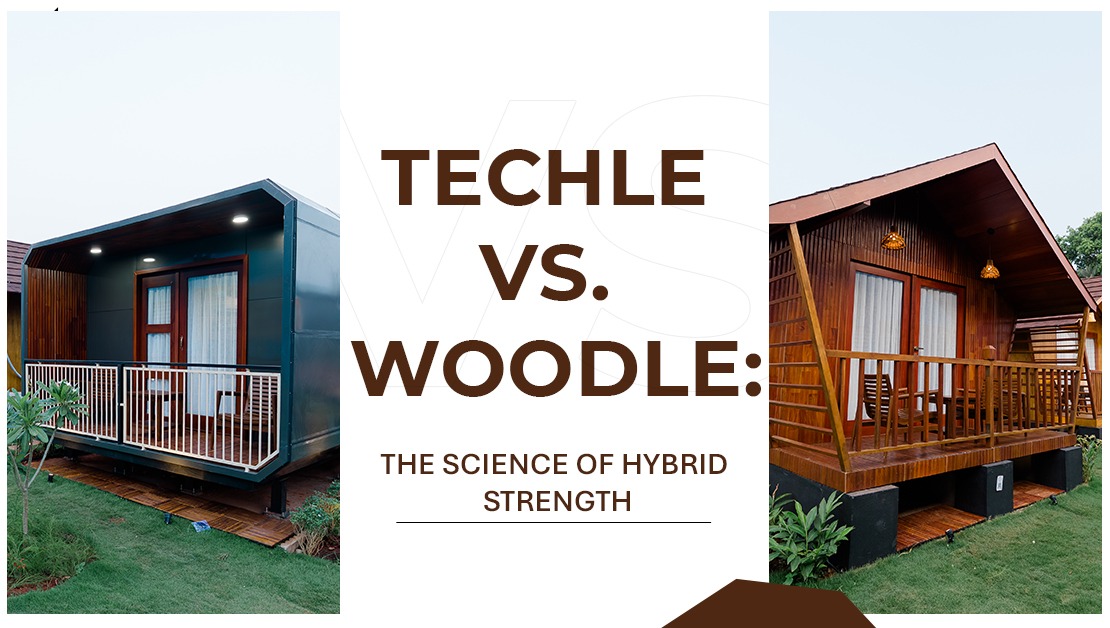
Two platforms. One shared foundation. A complete engineering answer to the oldest dilemma in modern architecture: warmth or versatility?
Picture a buyer who has spent months searching for a home in the Nilgiris and keeps arriving at the same impossible crossroads. The buyer wants a structure that breathes like a forest, that smells faintly of warm timber on a monsoon morning, and that makes the guests feel as though the building itself is alive. But the buyer also needs something that can survive a mountain winter, survive transport to an elevation where heavy machinery can't follow, and survive three decades of Indian climate without constant maintenance.
Every architect the buyer has spoken to has offered nothing but a compromise. Choose natural warmth, but sacrifice structural certainty. Alternatively, you can choose engineered resilience and reside in a box that lacks a distinct identity.
Techle Indo Innovation was built precisely because that compromise is false. The company's answer isn't a single product; it's a structural philosophy expressed through two distinct systems: Techle, the aluminium homes engineered for urban complexity and extreme terrain, and Woodle wooden homes, the pure timber prefab system designed for eco-luxury and biophilic living. They are not competitors. They are answers to different questions.
The question was never whether to use wood or aluminium. The question is, “Which structure is suitable for your site, your terrain, and your dream project?”
Before we unpack each system, there's a story to tell about what they share and why that shared foundation is the real source of both systems' credibility.
Whatever the buyer ultimately chooses, every plank, panel, and structural member in the home will have passed through the same rigorous treatment cycle, a five-stage industrial fortification process developed and refined at Techle's manufacturing facility in Jepara, Indonesia.
This is not a surface treatment. It is a molecular transformation of the wood itself, and it is the reason both Techle and Woodle systems can credibly make claims that traditional site-built homes cannot.
SVLK-Certified Sourcing: All timber is sourced from a legally certified entity managed by the Indonesian government. Every log is traceable, a non-negotiable for responsible construction.
Logs are cut by machines to precise sizes, making sure they are all the same thickness, which is necessary for perfect prefab assembly.
Vacuum Pressure and Chemical Treatment: We draw out moisture and eliminate larvae and termites, then drive the treatment up to 4 mm into the wood fibre, providing protection that lives inside the wood, not on its surface. Then the chemical is sucked out, leaving no space for termites in the future. This process takes up to 5 hours.
Industrial Kiln Drying (10 to 15 Days): A controlled drying process reduces final moisture content to 8–12%. This stabilises the wood dimensionally; it will not shrink, warp, or crack regardless of the climate it is installed in.
Final Component Processing: The stabilised wood is carefully shaped into finished parts like flooring, panels, and structural frames; assembled; and completed to high-quality standards before any piece leaves Indonesia.
The result of this process is wood that has been entirely changed: it doesn't shrink or warp, is resistant to pests, doesn't absorb moisture, and is stronger than any wood made by regular carpentry. It is the DNA that both Techle and Woodle carry from the factory floor to your site.
Now, let's meet the two systems that inherit that foundation.
The Techle system was created for situations where regular building methods won't work due to strong structural needs, difficult land, or transport issues, and where using only wood isn't enough for things like resisting rust or keeping heat in.
At its core, Techle is a 100% knock-down architectural system built on a powder-coated GI steel skeleton. The outer shell is 1.5 mm grade 1100 aluminium panels, powder-coated with Jotun Facade 2488 for a finish that weathers without fading or corroding. Between the skin and the frame sits an EPS foam core wrapped in air-bubble aluminium foil, creating a thermal barrier that keeps interiors temperate without relying on constant HVAC intervention.
Step inside a Techle aluminium-wood home, however, and the industrial exterior gives way entirely to natural warmth. Interior walls and ceilings are lined with premium mahogany. Floors carry matching solid hardwood. The contrast is deliberate and precise: the toughness of metal where the weather lives, and timber has a soul for people.
Grade 1100 aluminium, over 99% pure with a semi-hard H14 temper, naturally resists corrosion, making it ideal for coastal areas, high locations, and urban rooftops where salt and pollution can damage regular finishes.
The aluminium and GI steel frame, which is fire-retardant rated for up to 3 hours, does not contribute fuel to a fire, thereby buying critical evacuation and rescue time.
Completely termite-proof, the metal structural skeleton offers no organic material for wood-boring insects to colonise.
Full knock-down home technology means each part of the home can be easily assembled, dismantled, and relocated as per the requirement. This is the best concept for resort owners, institutional developers, or anyone looking to build in remote regions.
Lightweight construction reaches elevations and terrains where heavy concrete equipment cannot, such as mountain homes, rooftop extensions, and remote farmland builds.
If Techle is the system for structural complexity, Woodle, a wooden home, is the system for sensory richness. It is the choice of buyers who want their building material to be an experience, who understand that there is something neurologically and physiologically different about living within real timber walls.
The Woodle system uses a Hybrid Light Frame Panel (HLFP) design, which includes a strong frame made of high-density hardwoods like mahogany, merbau, and teak, with a density of 800 to 1,000 kg/m³, along with an EPS foam insulation core and outer panels made from the same high-quality woods. The entire assembly is prefabricated off-site in Jepara, arriving at your site as a precision-cut, ready-to-assemble system.
The sustainability credentials of Woodle are not a marketing position; they are an engineering reality. Wood is a carbon-sequestering material: the structure of a Woodle wooden home or wooden cottage is, in a meaningful sense, a carbon sink built into your property. The company's SVLK certification ensures every cubic metre of timber is legally sourced from responsibly managed forests, and the overall lifecycle footprint of a Woodle home is dramatically lower than an equivalent concrete or steel structure.
Natural thermal mass of solid hardwood provides passive temperature regulation. Woodle homes stay cooler in summer and warmer in winter without relying on mechanical systems, which cuts electricity bills meaningfully over the building's lifetime.
Seismic flexibility is built into the structural system: high-density wood frames flex and absorb seismic energy rather than shattering under it. For hill stations and coastal buildings in earthquake-prone zones, this flexibility is a genuine engineering advantage over rigid concrete.
Carbon-negative construction: Woodle homes are SVLK-certified and sequester CO? rather than emitting it during production, unlike steel or concrete equivalents.
Designed for a lifespan of 50+ years through the 5-Stage Fortification Process, the wood is transformed, not merely coated.
"Breathable" living environment: Real wood naturally regulates indoor humidity, and there are no off-gassing chemicals from wet cement or synthetic materials, making Woodle homes significantly healthier for children and the elderly.
Here is the detail that most buyers miss: whichever structural system you choose, the interior experience is the same. The Woodle product ecosystem – mahogany wall panels, solid hardwood flooring, teak bathware, wooden furniture, pergolas, and decking tiles – layers on top of either platform. A Techle Aluminium home can be as warm and timber-rich on the inside as a Woodle Wooden home. A Woodle home can carry every bespoke wooden interior element you could want.
The structural frame decision is about terrain, transport, load, and external performance. The interior design, the grain on your bathroom wall, the timber species under your feet, and the pergola casting an afternoon shadow over your deck are separate, entirely open conversations. Techle Indo Innovation's full product range is available for both.
Come See for Yourself
You can verify every claim made in this article with your own hands. At our Experience Centre in Devanahalli, both fully assembled Techle and Woodle home units are available for a walkthrough. Press your palm against a 5-stage-treated wooden wall. Step across the solid wood floors. Understand each product physically from the inside, why the assembly takes two weeks, and how the result lasts more than fifty years.
Our design team is on-site to walk you through customisation options, discuss your specific terrain and brief, and help you choose the structural platform and interior ecosystem that is right for your project. Zero obligation. Zero surprises on pricing.