
Aluminium Cottage Manufacturer in India: What to Look for Before You Build
Home/ Aluminium Cottage Manufacturer in India: What to Look for Before You Build
Home/ Aluminium Cottage Manufacturer in India: What to Look for Before You Build
Before you sign with anyone, ask yourself these questions:
Do you know the exact aluminium alloy grade going into your walls, or are you trusting a sales brochure?
Can you tell the difference between a genuine knock-down structure and a permanently welded one?
Do you know how much of your home will actually be built in a factory versus assembled on a raw, exposed site?
Have you checked whether the manufacturer can show you a real, standing unit, not just renders?
Do you know what happens to your warranty if the frame corrodes in the sixth year?
If you hesitated on more than one of these, this guide is for you. Aluminium homes are becoming a serious alternative to traditional construction across India for rooftop extensions, hill retreats, coastal villas, and resort cabins, but the quality gap between manufacturers is wide. Choosing the right aluminium cottage manufacturer in India isn't just about picking a material; it's about vetting a process. Here's exactly what to look for before you commit.
The word "aluminium" covers a lot of ground, from a corrugated shed roof to a precision-engineered residential system. Before evaluating any manufacturer, understand what should actually be inside the walls of a genuine aluminium house.
A properly engineered structure isn't a single sheet of metal bent into a box. It's a layered system, and each layer should be something the manufacturer can specify in writing:
Frame material: A powder-coated GI steel skeleton forms the structural backbone. This is what carries the load, not the cladding.
Cladding grade: Look for a specified alloy series (commercially pure aluminium, with an Al composition greater than 99%), a stated thickness (typically around 1.5mm), and a temper designation such as H14 (semi-hard). If a manufacturer can't give you these numbers, they likely don't have them.
Powder coating specification: Ask for the coating brand, finish type, gloss range, and dry film thickness. This determines how the exterior weathers over decades, not just how it looks on day one.
Insulation core: EPS foam wrapped in air-bubble aluminium foil should sit between the outer skin and the interior lining. This is what actually controls the indoor temperature.
Interior lining: Most quality aluminium houses use solid hardwood, typically mahogany, for interior walls, ceilings, and flooring, pairing the toughness of the metal shell with the warmth of natural timber inside.
If a manufacturer skips any of these five layers, that's a warning sign.
Once you understand the structure's anatomy, the next step is to interrogate the manufacturer's process. Here are the questions to ask and why each answer is important.
Is it a genuine knock-down system, or a permanent weld disguised as one? A true knock-down aluminium house can be dismantled and relocated. This matters enormously if you're building on leased land, in a resort cluster that may expand, or in a location where your plans might change in five years. Ask specifically how the components are joined, bolted, modular, or welded on-site.
What's the real factory-to-site build split? Speed claims are only meaningful if you know where the time is actually spent. A manufacturer that fabricates most components in a controlled factory environment should be able to walk you through exactly what happens on-site versus in-house, as they cut, treat, and pre-finish every piece to the millimetre. On-site work should largely be assembly, not construction from raw materials.
Where is manufacturing done, and is there quality inspection before shipping?
Ask whether components are inspected and quality-checked before they leave the factory or whether defects get discovered (and fixed, badly) on your property. A manufacturer with a documented factory process, ideally one you can visit or see units from, is a stronger bet than one that assembles in a warehouse with no traceability.
What fire and pest performance can they document? Because the structural skeleton of a genuine aluminium house is metal, it should be inherently termite-proof; there's no organic material for wood-boring insects to attack. Ask for the documented fire-retardancy rating as well; a credible manufacturer should be able to state how long the structure resists fire before compromising, not just claim "fire-safe" without a number.
Can the frame actually withstand your terrain and climate? If you're building on the coast, ask specifically about corrosion resistance under salt exposure, not just general durability claims. If you're building in a seismic zone, ask how the lightweight frame performs under wind and seismic loads compared to a rigid concrete structure. If you're building in the hills, ask how components are transported to sites that heavy machinery can't reach.
What's included in the quoted price, and what's an add-on? Get clarity on whether the quote covers the full structural shell frame, cladding, insulation, interior lining, flooring, or just the exterior envelope. Foundation work, utility connections, and interior finishing are common places where costs quietly expand.
Not every site needs an aluminium structure, and a good manufacturer will tell you that honestly rather than upselling regardless of fit. Aluminium houses are often the best option for:
Rooftop extensions in cities like Bengaluru, where load limits on existing RCC structures rule out heavy concrete additions
Hill and remote terrain in Coorg, Ooty, and similar locations where vehicle access is limited and lightweight, factory-cut components are far easier to transport than bricks and cement
Coastal builds where salt air would corrode conventional metal finishes within a decade, but corrosion-resistant aluminium cladding holds up
Resorts and commercial cabins that need fast deployment, consistent quality across multiple units, or the flexibility to relocate structures later
Buyers who want a genuinely fast build without sacrificing structural integrity, going from foundation to move-in-ready in weeks rather than the better part of a year
If your site and priorities match this list, an aluminium cottage manufacturer in India is worth seriously evaluating. If your priority is a fully organic timber aesthetic throughout, it's worth also looking at wooden or CLT systems, since the choice of exterior shell is separate from your interior design ambitions.
Here's a nuance worth understanding: in most engineered aluminium houses, the primary interior lining is solid hardwood, not aluminium. The metal does its work on the exterior cladding, corrosion resistance, and structural cladding, while the interior is where natural timber takes over for warmth and finish.
That said, aluminium still has a real role in interior design, and it's worth asking your manufacturer how they approach it:
Window and door framing: Aluminium framing elements can appear inside living spaces as clean, low-maintenance trim against timber walls, giving interior design a modern-industrial contrast point.
Structural reveal: Some interior design aluminium approaches intentionally expose framing or structural elements at transitions (ceiling lines and doorways) as a deliberate design choice, rather than hiding every trace of the metal shell.
Fixtures and hardware: Handles, rails, and fittings in an aluminium finish are a practical way to echo the exterior material language inside, without compromising the warmth of a wood-lined room.
If a full aluminium interior design, with visible metal surfaces throughout, is specifically what you're after, say so explicitly when you brief a manufacturer, since standard builds default to timber-lined interiors for comfort and acoustic performance. A transparent manufacturer will tell you what's standard and what's a custom request, rather than letting you assume.
A few warning signs that should make you slow down before signing:
No spec sheet is available on request. If a manufacturer can't provide you with the alloy grade, thickness, and coating details in writing, they may not have standardised specifications at all.
Vague timeline claims. "Fast construction" without a factory-versus-site breakdown is marketing, not a commitment.
No mention of an insulation core. If EPS foam or an equivalent isn't part of the described build, expect poor thermal performance regardless of how the exterior looks.
Unclear warranty language. Ask specifically what's covered: structural integrity, corrosion, and pest resistance, and for how long, in writing.
No option to see a completed unit. If a manufacturer can't show you a standing structure or an experience centre, you're buying on faith alone.
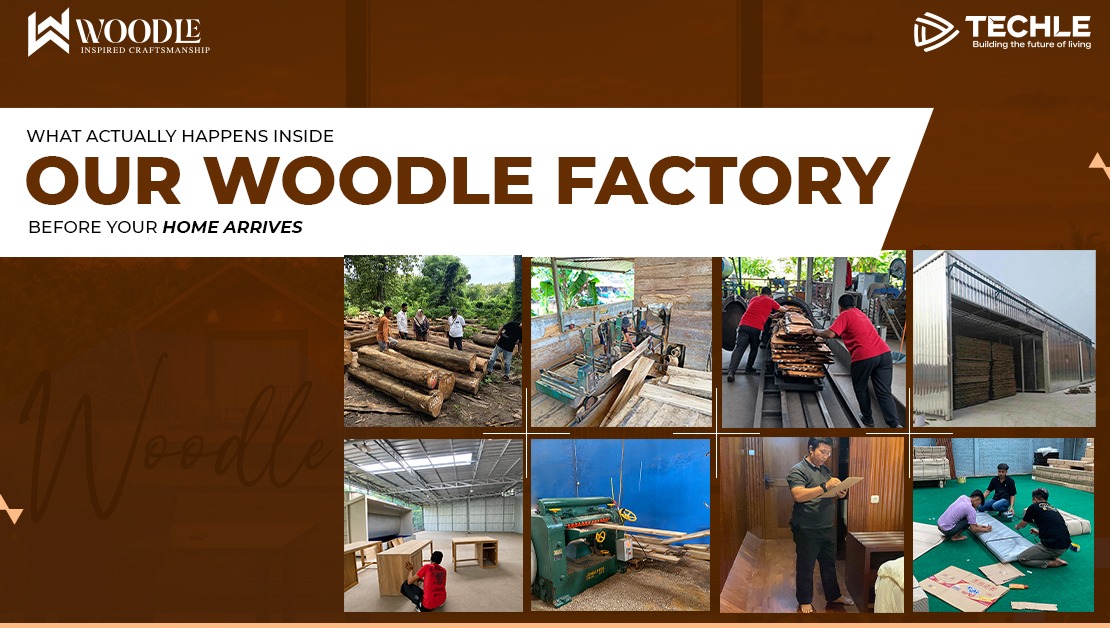
The single biggest predictor of build quality isn't the brochure; it's where and how the components are made. A manufacturer that fabricates in a controlled factory environment eliminates the two biggest failure points of traditional construction—weather delays and human error during on-site cutting by using precision machinery to cut every component to exact specifications before it ever reaches your site.
This matters just as much for the timber elements paired with aluminium houses as it does for the metal shell itself. A manufacturer that sources wood through a documented, traceable supply chain, with legal sourcing certification for every log, signals the same process discipline you want to see applied to the aluminium components. If a company is rigorous about paperwork for one material, it's a reasonable proxy for rigour across the build.
Keep this list handy when you're comparing quotes:
Request the full technical spec sheet: alloy grade, cladding thickness, coating type
Confirm the factory-to-site build ratio in specific terms
Ask for documented fire retardancy and pest-resistance figures, not just claims
Visit a completed unit or experience centre if one exists
Get absolute clarity on what's included in the quoted price versus what's billed as an extra
Get warranty scope – structural, corrosion, pest, confirmed in writing
Clarify upfront whether you want a standard timber-lined interior or specific aluminium interior design elements
Aluminium houses have earned their place as a legitimate, fast, and durable alternative to traditional construction in India, but only when built by a manufacturer who can back every claim with a number, a document, or a unit you can walk through yourself. Ask the tough questions before you build, not after.
Techle Indo Innovation manufactures aluminium homes using a powder-coated GI steel frame, grade 1100 aluminium cladding, and EPS-insulated construction, with components precision-built at our facility in Jepara, Indonesia. You can walk through a fully assembled unit at our Experience Centre in Devanahalli, Bengaluru, before making any decision.